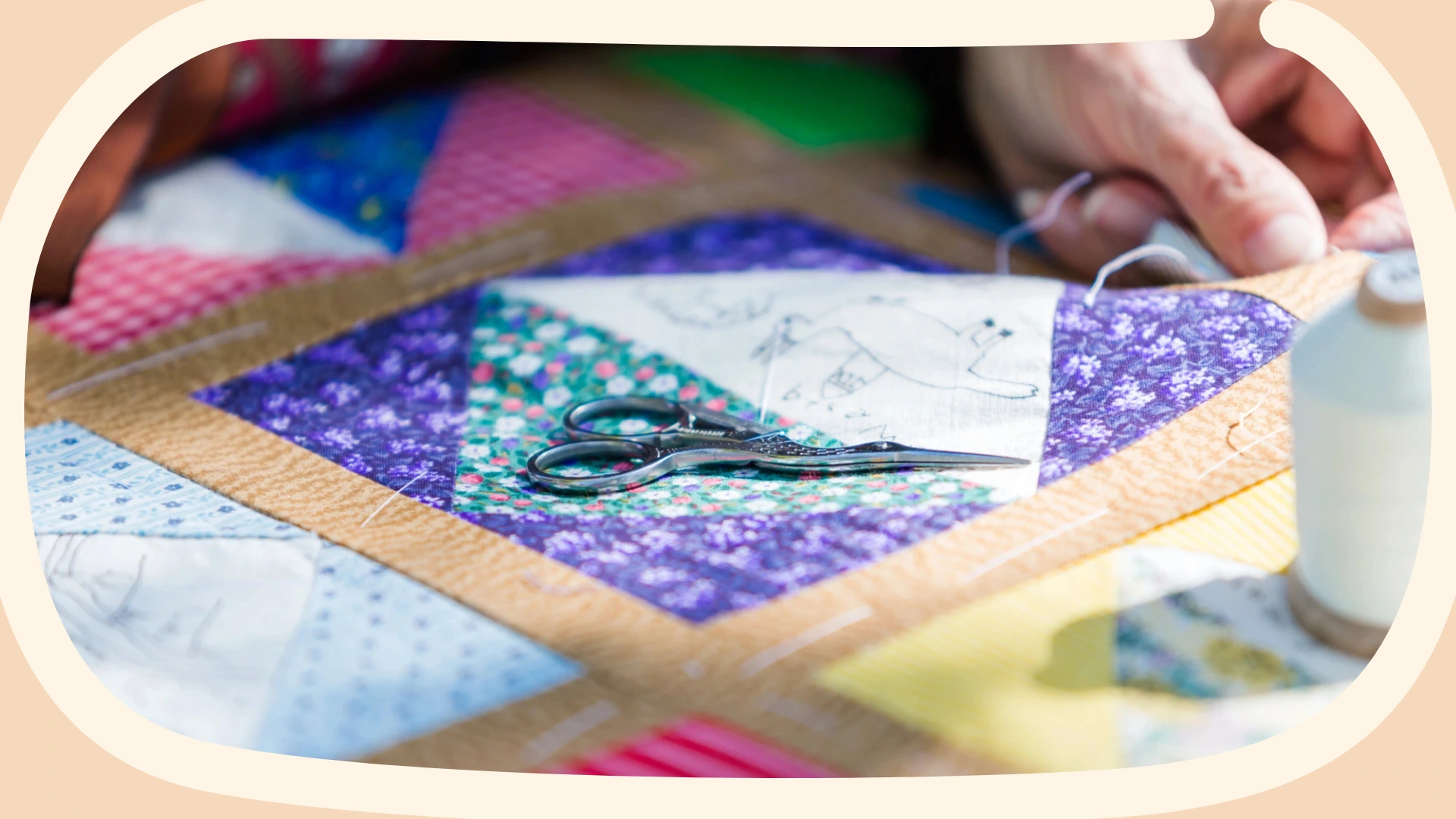
Every maker has leftover materials that feel too useful to throw away. Instead of letting those scraps pile up, you can use them to create new products, free samples, or limited-edition pieces for your Etsy store.
In this post, we’ll show you how to turn scraps to sales: practical ways to reuse your scraps, minimize waste, and create items with a story shoppers can connect with.
Key Takeaways
- Using scraps can transform production waste into sellable items, boosting both profit and sustainability.
- Upcycling leverages materials you already have, allowing for low-cost, creative experimentation with unique product ideas.
- Etsy trends in 2026 indicate shoppers prefer personalized, eco-friendly items, making scraps valuable for unique offerings.
- Practical ways to leverage scraps include creating smaller products, free samples, and limited-edition items.
- Distinct pricing strategies for upcycled goods can increase average order value while promoting sustainability.
Your Scrap Pile Is a Gold Mine
The “Scrap Economy” is the strategic process of transforming production waste into high-value, sellable inventory. By creating new items from your offcuts, you help both the planet and your bank account.
This guide will show you how to decrease your supply costs and expand your customer base through sustainable craftsmanship.
The Value of Materials You Already Have
When you create offerings to list on Etsy, you have already paid for the supplies used to make them. This means that you already own any leftover “bits and bobs.”
As a result, the cost of any items made from the leftovers is often very low. This practice is often referred to as “upcycling.” Every sale from these items (minus your labor and minor consumables) is pure profit. These sales can help you scale your online business.
Upcycling also allows you to experiment with product ideas with less financial risk. If an experimental item doesn’t do well, your business won’t take a huge financial hit because you haven’t spent money on additional supplies for that specific item. Your main investment is the time and care you put into creating it.
Why Upcycling Works in 2026
Using eRank features like Trend Buzz, we’ve identified a shift in shoppers’ behavior. Etsy shoppers are beginning to pivot toward warm, textured, personalized items that tell a story. This is a noteworthy shift from the cold, standardized aesthetic (think “Millennial Gray“) that maintained popularity through the 2010s and early 2020s.
Upcycling fits perfectly with this movement because it combines reused supplies, one-of-a-kind character, and an eco-conscious approach. Here are some “niched down” concepts that work well with this broader trend:
- Warm minimalism: simple shapes, but with soft materials, neutral tones, and a “lived-in” feel rather than a clinical look. For more product and styling ideas, explore eRank’s Pinterest board: 2026 Etsy Color of the Year: Patina Blue.
- Cozy / cocooning: a need for comfort, softness, and objects that make everyday life and the home atmosphere feel better. For more product and styling ideas, explore eRank’s Pinterest boards: 2026 Pantone Color of the Year: Cloud Dancer, You Deserve This.
- Handmade authenticity: growing interest in handcrafted items, embraced imperfections, visible texture, and objects that have a story. For more product and styling ideas, explore eRank’s Pinterest boards: Rebel Goods, Play Haus.
- Nostalgia / retro / modern nostalgia: a mix of vintage and new, with a more personal and less polished aesthetic. For more product and styling ideas, explore eRank’s Pinterest boards: Playful Home Decor & Wall Art, Nonna Holiday, Supper Club.
- Eco-consciousness: a rise in low-waste, recycled, repurposed, upcycled, or naturally sourced purchases. For more product and styling ideas, explore eRank’s Pinterest board: Nuts About Nature.
- Personalization: shoppers want pieces that feel “made for me,” with a name, date, color, or unique detail.
Your Scraps-to-Sales Toolkit: Practical Ways To Turn Scraps Into Unique Offerings
Here are a few practical ways to use your scrap materials to create unique items, little “add-on” offerings, or limited-edition pieces, with examples shared by members of the eRank community.
Turn Scraps Into Smaller Versions of Your Main Products
Scraps can become mini versions, add-ons, or lower-priced items that connect naturally to your existing listings. This can help you offer more price points while keeping your listings cohesive.
For fiber artists such as crocheters, knitters, and weavers, even small yarn ends can become useful supplies. They can be used as stuffing for things such as plushies and pin cushions. You can also use them to create scrappy blankets, spin into colorful yarn, or make smaller versions of best-selling items. For example, a maker could offer “Mommy and Me” matching hat sets, mini ornaments, or “fun-size” add-ons bundled with standard-size items.
Example searches: hand knit scrap beanie; Mommy and Me set
Use Scraps To Reduce Waste in Your Production Process
Some sellers design smaller items with the materials left over from their main items. This helps them utilize more of each batch of fabric, yarn, wood, paper, clay, glass, etc.
Melanie from AlmasAprons shared a lovely example of turning cotton fabric scraps into a practical, eco-friendly product: “The mini jewelry envelope, is a small, stylish cloth envelope designed to store and protect delicate jewelry items such as earrings, bracelets, and charms. In keeping with Aunt Alma’s legacy of being resourceful and not wasteful, the earring envelope is crafted from fabric scraps made of cotton, making it soft and eco-friendly. Its creation promotes sustainability and reduces waste.”
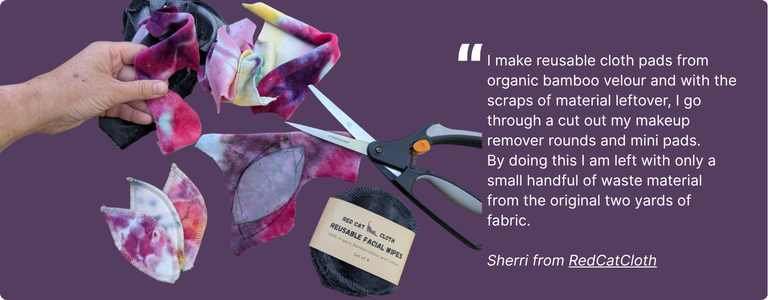
Sherri from RedCatCloth shared how she plans smaller products around her main production process, using leftover organic bamboo velour to decrease waste: “I make reusable cloth pads from organic bamboo velour and with the scraps of material leftover, I go through…(and)…cut out my makeup remover rounds and mini pads. By doing this I am left with only a small handful of waste material from the original two yards of fabric.”
Use Leftover Batches for Free Samples
For some products, such as bath and body items, leftover material from a batch can become free samples. Add them to customers’ orders to curtail waste and introduce shoppers to another scent, formula, or item in your store.
Make One-of-a-Kind or Limited-Edition Items
Because supply remnants are often limited in size, color, or quantity, they can be a good fit for unique pieces, smaller batches, or limited-edition offerings.
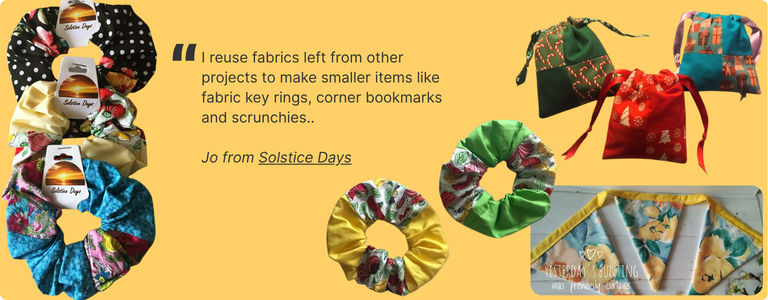
Jo from Solstice Days shared howleftover fabrics from other projects become sustainable, one-of-a-kind items: “I reuse fabrics left from other projects to make smaller items like fabric key rings, corner bookmarks and scrunchies, saving fabrics from…(the)…landfill and…(offering)…customers sustainable items and not buying fabrics new for smaller items which isn’t really cost effective and the customers get unique one off items.”
Give Materials a Second Life
Scraps don’t have to come from your own production. Old clothing, reclaimed materials, vintage textiles, packaging, wood offcuts, or other saved supplies can become useful new pieces with a strong story.
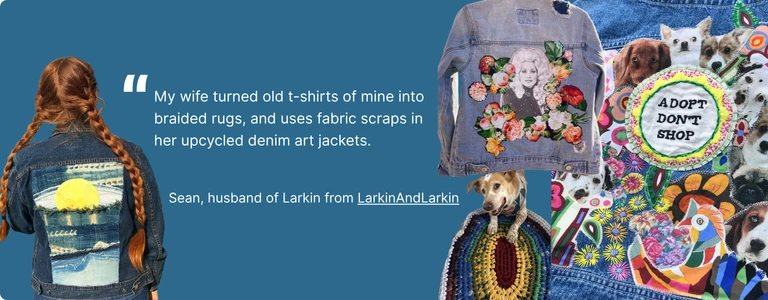
Sean from eRank shared how his wife, Larkin of LarkinAndLarkin, gives old clothing and fabric scraps a second life by converting them into practical pieces for the home, pets, and everyday use: “My wife turned old t-shirts of mine into braided rugs, and uses fabric scraps in her upcycled denim art jackets. She tries to stop me from throwing things away all the time (and I hate clutter so it’s a point of contention 🙂 ).”
Example search: quilted jacket
Sell Scraps As Supplies for Other Makers
If you do not have time to upcycle all of your leftover supplies, you may still be able to sell scraps as creative supplies for other makers.
Example searches:
- glass pieces
- vintage embroidery scraps
- recycled silk ribbon
- vintage book confetti
- quilting bundle
- scrap leather
- vintage ephemera
- scrap silver
More Scrap-Based Product Ideas by Material
Beyond fabric and fiber, many other supplies can be repurposed in practical and creative ways. Here are a few ideas that can work especially well with leftover, reclaimed, or smaller pieces of material.
Fabric Scraps
Fabric leftovers can become patchwork pieces, accessories, or home decor items. For example, patchwork curtains can utilize mixed fabric pieces while also fitting into the growing interest in warm, layered, handcrafted interiors.
Example search: patchwork curtains
Glass Scraps
Stained glass artists can use smaller glass pieces to create window hangings, suncatchers, mosaics, ornaments, jewelry, or decorative accents. These work well because minuscule variations in color and shape can become part of the design instead of a flaw.
Example search: stained glass window hanging
Clay and Ceramic Scraps
Leftover clay can often be reworked, combined, or shaped into smaller objects such as earrings, worry stones, chopstick rests, charms, buttons, plant markers, or test-tile ornaments. These items are a good fit for leftover clay because they do not require large, uniform pieces.
Example searches: ceramic worry stones; ceramic chopstick rest
Wood Offcuts
Wood offcuts can become ornaments, keychains, coasters, shelves, handles, or decorative repair pieces. This works especially well when the natural grain, shape, or imperfections of the wood are part of the finished design.
Example searches: reclaimed wood furniture; reclaimed wood planters; reclaimed wood shelves; reclaimed wood coaster
Paper Scraps
Paper scraps can be used for gift tags, bookmarks, collage packs, stationery accents, envelope liners, packaging details, or mixed-media supplies. These can be especially useful if you already sell stationery, art prints, journals, stickers, or handcrafted packaging.
Example search: paper scrap collage pack
Repair and Patchwork Ideas
Scraps can also be used for visible mending, patching, repairing, or customizing existing items. This can work with fabric, leather, denim, wood, ceramics, and even paper goods, especially when the repair becomes part of the item’s visual story.
Example search: visible mending
Strategic Pricing and Bundling
While your material costs for scrap material are minimal, remember to account for your time, skill, and the unique value of a handcrafted, eco-friendly item. Don’t undersell your craft! Consider charging a premium for the eco-conscious aspect and the one-of-a-kind nature of each upcycled piece.
Entry-Level Price Points
Diversifying Your Price Points: scrap-based micro-products allow you to introduce entry-level price points for your art. This attracts buyers who love your aesthetic but aren’t ready for a high-ticket purchase.
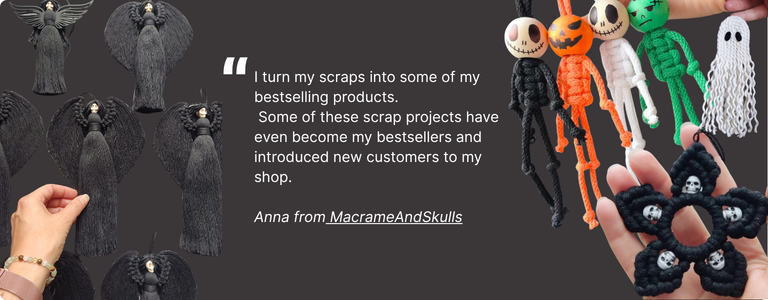
Anna from MacrameAndSkulls shared a great example of how leftover materials can become smaller, more affordable products that customers love: “I hate throwing away perfectly good cotton cord, so I turn my scraps into some of my bestselling products. I use leftover pieces to create my macrame Skull Angels, snowflakes, ghosts, and skeleton ornaments, paired with howlite skull beads and wooden beads. It helps me reduce waste, make the most of every spool of cord, and offer smaller, more affordable products that my customers love. Some of these scrap projects have even become my bestsellers and introduced new customers to my shop.”
Gift Sets & Average Order Value
The Power of Gift Sets: bundle your upcycled items into cohesive sets or pair them with your primary offerings to create premium eco-conscious gift boxes. This strategy dramatically increases your Average Order Value (AOV) without requiring new raw materials.
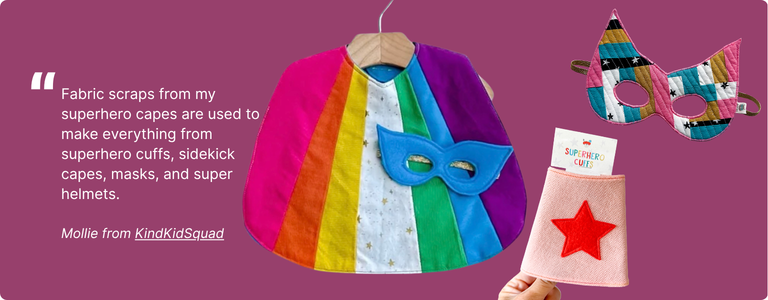
Mollie from KindKidSquad shared a great example of using scraps to expand a product line, using fabric leftovers from superhero capes to make matching accessories: “Fabric scraps from my superhero capes are organized into bins by color. Then they are used to make everything from superhero cuffs, sidekick capes, masks, and super helmets.”
Scraps as a Business Model
As a result, items made from leftover supplies can have very low material costs. In some cases, these leftovers can even become the foundation of an entire Etsy store. These businesses convert reclaimed materials into finished products or collect and resell scraps to other makers.
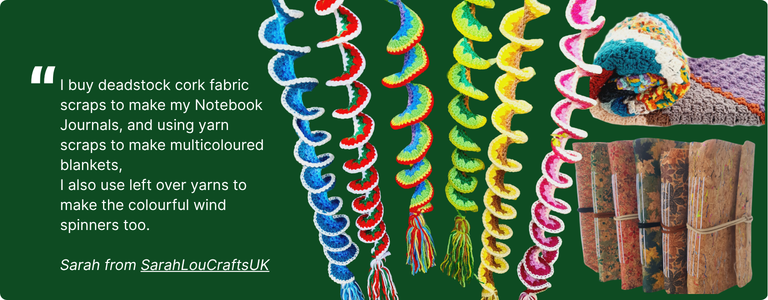
Sarah from SarahLouCraftsUK shared a great example of how leftover materials can become more than an occasional add-on, and even help shape the direction of a shop:
“I buy deadstock cork fabric scraps to make my Notebook Journals, and…(use)…yarn scraps to make multicoloured blankets. I also use…(leftover)…yarns to make the colourful wind spinners too. Sustainability and eco-conscious gifting is the core ethos of my small business.”
Showing the Value of Upcycled Products
When you create offerings from leftover supplies, presentation matters. Shoppers need to see that your item is not simply “made from leftovers,” but thoughtfully designed, carefully assembled, and worth choosing.
Use your products’ descriptions to share the story behind the materials: where they came from, why you repurposed them, and how they became part of the finished item. This helps shoppers understand the care, creativity, and purpose behind your work.
Photo Tips for Your Shop
Show the transformation. A simple before-and-after photo, with the original scraps next to the finished item, helps buyers understand the upcycling story at a glance.
Before choosing your main listing photo, remember that Etsy may crop thumbnails differently depending on where they appear. Our visual guide can help you see how your images may display across different layouts.
More on this: Five Photography Tips for Better Etsy Photos.
Eco-Friendly Fulfillment: Purposeful Packaging
If your items are made with sustainability in mind, your packaging should support that same story. Thoughtful, Earth-friendly packaging can help make the customer experience feel more consistent, from the supply leftovers you use to the moment the buyer opens their order.
Learn more here: An Introduction to Eco-Friendly Packaging for Etsy Sellers
Start Small, Grow Sustainably
Turning scraps into new offerings does not mean reinventing your entire business. It starts with looking at the supplies you already have in a new way.
By incorporating more of what you already own into your items, you can decrease waste, lower costs, add variety to your offerings, and tell a story that many Etsy shoppers care about.
Your next smart scraps-to-sales idea may be sitting in your scrap bin!
Our team is continuously improving eRank’s tools to better serve our members. As a result, some of the content featured in this post may differ from the content featured on erank.com. Please note that quotas and data availability may differ per eRank plan.